How Much Does a Good Quality Vinyl Plotter Cost in Pakistan?
If you are planning to start a sticker, signage, or apparel printing business, one of the first questions is about Vinyl Plotter Cost in Pakistan. The honest answer is that there is no single number. The cost depends on the machine’s size, motor, cutting force, software support, and the kind of work you plan to do. On a site like tmctech.pk, you will find different vinyl cutting plotters built for different needs, and understanding what separates them will help you pay for what you need rather than for features you will never use.
This guide explains what drives the cost of a vinyl plotter, how to recognise a good machine, and which questions to ask before you buy.
What Is a Vinyl Plotter?
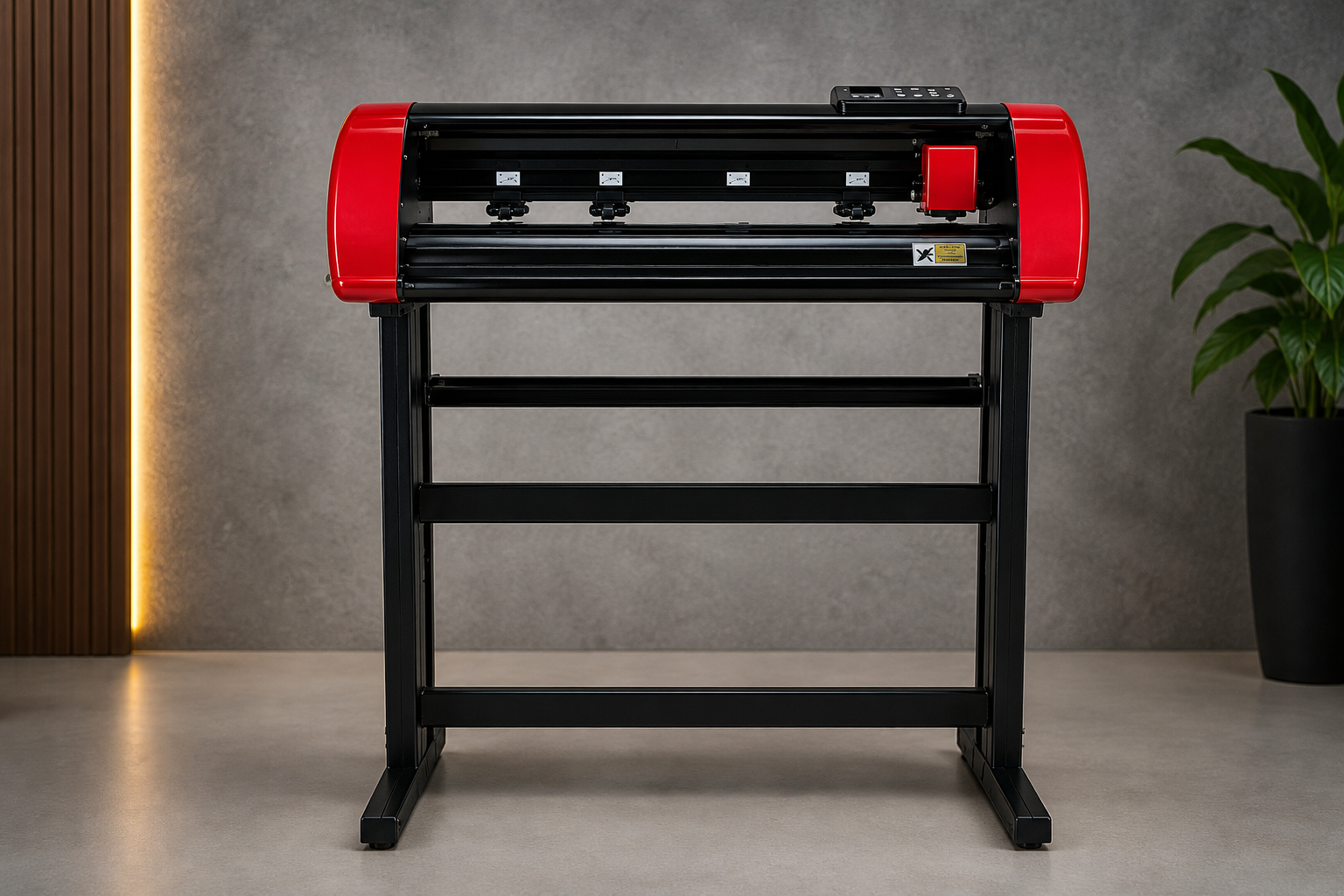
A vinyl plotter, also called a vinyl cutter, is a machine that cuts shapes, letters, and designs from self-adhesive vinyl, heat transfer vinyl (HTV), and similar sheet materials. You send a vector design from your computer, and the machine moves a small blade along the design path to cut it precisely.
It is widely used for:
- Vehicle graphics and shop signage
- Custom stickers and decals
- T-shirt and garment printing with HTV
- Window graphics and wall lettering
- Packaging labels and craft projects
Why There Is No Single Price for a Vinyl Plotter
Two machines can look similar from the outside and still differ a lot inside. One may be designed for light hobby use, while another is built to run all day in a busy sign shop. That is why the Vinyl Plotter Cost in Pakistan changes from one model to another. It is better to compare machines by specifications than by price alone.
Key Factors That Affect Vinyl Plotter Cost
1. Cutting Width
Cutting width is the maximum media width the machine can handle. Smaller desktop models suit crafts and small stickers. Wider machines handle full vinyl rolls for banners, vehicle wraps, and large signage. A wider machine needs a stronger frame and drive system, which affects the cost.
2. Motor Type
The motor controls how smoothly and accurately the blade moves.
- Stepper motor: common in entry-level and mid-range machines and suitable for regular sticker and sign work.
- Servo motor: uses position feedback, which gives better accuracy at higher speeds and on larger jobs.
If your work involves fine text or long continuous runs, the motor type matters.
3. Cutting Force and Speed
Cutting force is measured in grams and shows how much pressure the blade can apply. Thin vinyl needs little force, while thicker or reflective materials need more. Cutting speed affects how quickly you can finish jobs, which matters when you have regular orders.
4. Contour Cutting (Optical Eye)
If you print stickers and then cut around them, you need contour cutting. The machine reads registration marks printed on the sheet and cuts along the edge of the printed design. Plotters with this feature are made for print-and-cut workflows, so they differ from basic cut-only models.
5. Software Compatibility
A plotter is only as useful as the software that drives it. Check which design programs and plugins the machine supports, and whether the software is included. Compatibility with the design tools you already use will save you time.
6. Build Quality and Stand
A rigid body, a stable stand, smooth media feeding, and a good pinch roller system all contribute to clean cuts. Weak build quality shows up as skewed media, uneven cuts, and rough corners.
7. Spare Parts and After-Sales Support
Blades, blade holders, cutting strips, and pinch rollers wear out with use. Before buying, make sure spare parts are easy to get and that someone can help you if the machine develops a problem.
How to Identify a Good Quality Vinyl Plotter
A good quality vinyl plotter shows its strength in the cut itself. When evaluating a machine, look for:
- Clean corners and curves: no rounded edges on sharp corners and no jagged curves.
- Small text accuracy: small letters should weed cleanly without lifting.
- Steady media tracking: the vinyl should travel straight without drifting.
- Adjustable blade pressure: so you can switch between materials easily.
- Stable operation at speed: little vibration when the machine is running.
- Easy setup: clear instructions and simple connection to your computer.
Ask for a demo or a sample cut if possible. A short test says more than a long spec sheet.
Which Vinyl Plotter Suits Which Business?
Small stickers and crafts: A compact desktop-size machine with easy-to-use software is usually enough. You do not need a wide format or heavy-duty build for light, occasional work.
Signage and shop lettering: Look for a medium to wide cutting width and a stable stand. Signage jobs often involve longer cuts, so smooth media feeding matters here.
T-shirt and HTV work: Good accuracy on small details and adjustable blade pressure are the priorities. HTV needs a precise cut depth so the carrier sheet stays intact.
Print-and-cut stickers: Choose a plotter with contour cutting and an optical sensor, so it can follow the edges of your printed designs accurately.
High-volume commercial work: A wide-format machine with a servo motor and strong build quality is better suited to daily, continuous use.
Choosing by use case is the simplest way to control your spending. Many beginners pay for a size or feature set they do not need yet.
Hidden Costs to Keep in Mind
The cutting machine is not the only expense. When planning your budget, also think about:
- Vinyl rolls and HTV sheets
- Spare blades and blade holders
- Transfer tape
- Design software, if it is not included
- A stand, if it is not part of the package
- Delivery and installation
- A suitable computer and workspace
Counting these early gives you a more realistic picture of your total setup cost.
Questions to Ask Before You Buy
Before finalising any plotter, ask the seller:
- What is the maximum cutting width and cutting force?
- Is it a stepper or servo motor?
- Does it support contour cutting?
- Which software is compatible, and is it included?
- What warranty is provided?
- Are blades and spare parts easily available?
- Is installation or basic training offered?
- Can I see a demo cut?
Final Thoughts
The Vinyl Plotter Cost in Pakistan depends on what you need the machine to do. Decide your work type, choose the right cutting width and features, and check spare-part availability before you decide. Spending on the right specifications will give you better results than simply choosing the cheapest or the biggest option.
To explore available models and get current pricing, visit the vinyl cutting plotters category at tmctech.pk, or contact the team directly to discuss which machine fits your business.
Frequently Asked Questions
Does a higher cost always mean a better vinyl plotter?
Not always. A better machine is the one that fits your work. A wide, high-speed plotter is wasted on occasional small stickers.
What is the difference between a stepper and servo motor?
Stepper motors are common in entry-level and mid-range machines. Servo motors use feedback to maintain accuracy at higher speeds, which suits larger or heavier workloads.
Which size is best for beginners?
Choose the size based on the largest job you expect to do. If you mostly make small stickers and labels, a compact model is enough. For signage, you need a wider one.
Can a vinyl plotter cut materials other than vinyl?
Many can cut HTV, thin paper, and some films, depending on cutting force and blade type. Check the machine’s specifications before attempting other materials.
What else do I need besides the machine?
You will need vinyl or HTV, a computer, design software, transfer tape, weeding tools, and spare blades.


